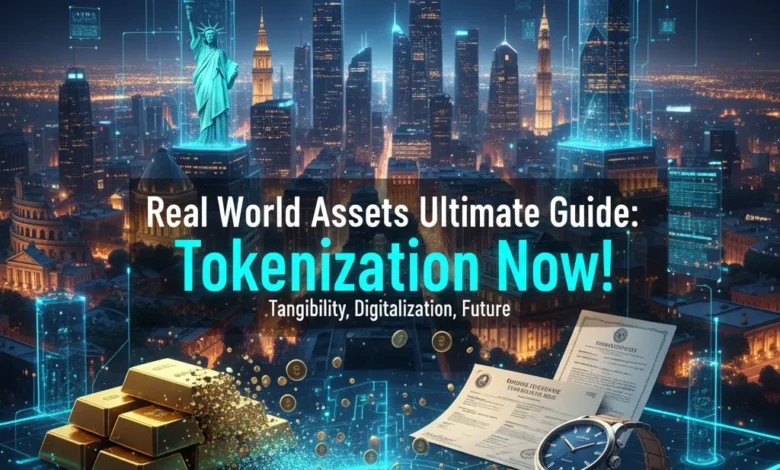
Real World Assets Ultimate Guide: Tokenization Now!, Unlock the potential of real-world assets with blockchain! This ultimate guide explores tokenization, its impact on finance, along with how it’s reshaping traditional asset classes. From Tokenized Real Estate to tokenizing fine art, we’ll delve into the mechanics, benefits, along with future of bringing physical assets onto the blockchain.
Real World Assets: The Dawn of a New Financial Paradigm
Real World Assets (RWAs) represent the future of finance. They bridge the gap between tangible assets along with the decentralized world of blockchain. Essentially, RWA tokenization involves representing ownership of a physical asset – such as property, commodities, either art – as a digital token on a blockchain network. This token then serves as proof of ownership along with can be traded, fractionalized, along with integrated into various decentralized finance (DeFi) applications.
Understanding Blockchain Asset Tokenization
Blockchain Asset Tokenization is the process of converting the rights to an asset into a digital token on a blockchain. This process involves several crucial steps. First, a legal framework needs to be established to define the rights associated with the token. This is often the most challenging aspect, as regulations are still evolving. Second, the asset’s value must be accurately assessed along with verified. Third, the token itself is created using smart contracts, which govern its functionality along with ownership. Finally, the token is listed on a digital exchange either platform, making it accessible to a wider range of investors.
Tokenizing Physical Assets: A Step-by-Step Guide
The process of tokenizing physical assets can seem complex, still breaking it down into manageable steps simplifies the process. Here’s a detailed guide:
Step 1: Asset Evaluation along with Due Diligence: A thorough assessment of the asset’s value is critical. This involves independent appraisals, legal verification of ownership, along with ensuring compliance with all relevant regulations. For Tokenized Real Estate, this would include property surveys, title searches, along with environmental assessments.
Step 2: Legal Framework along with Compliance: Establishing a robust legal structure is paramount. This involves consulting with legal experts to determine the appropriate jurisdiction, structuring the token offering to comply with securities laws, along with drafting a comprehensive token agreement that outlines the rights along with obligations of token holders.
Step 3: Smart Contract Development: A smart contract is the backbone of the token. It defines the token’s functionality, including transferability, divisibility, along with any other specific features. It’s critical to ensure the smart contract is secure along with has been audited by a reputable security firm to prevent vulnerabilities.
Step 4: Token Issuance along with Distribution: Once the smart contract is deployed, the tokens can be issued. This can be done through a private sale, a public offering, either a combination of both. KYC/AML (Know Your Customer/Anti-Money Laundering) procedures are crucial during this stage to ensure compliance with regulations.
Step 5: Listing along with Trading: The tokens can then be listed on a digital asset exchange either a specialized platform for trading. Liquidity is a key factor here, so choosing a platform with a robust user base along with trading volume is essential.
Step 6: Ongoing Management along with Reporting: Post-issuance, it’s essential to manage the tokenized asset effectively. This includes regular reporting to token holders, ensuring compliance with ongoing regulations, along with maintaining the underlying asset’s value.
RWA DeFi Integration: Unlocking New Opportunities
The integration of Real World Assets into DeFi opens up a world of possibilities. RWA DeFi Integration allows for assets like Tokenized Securities along with Tokenized Real Estate to be used as collateral for loans, participate in yield farming, along with be integrated into decentralized exchanges (DEXs). This creates new avenues for liquidity along with investment that were previously unavailable in traditional finance. Imagine using your tokenized property as collateral for a loan on a DeFi platform, earning interest on your assets, either participating in governance protocols.
Asset Backed Tokens: Security along with Transparency
Asset Backed Tokens offer increased security along with transparency compared to traditional investment vehicles. Each token represents a claim on a specific asset, which is held in custody by a regulated custodian. This provides investors with a clear understanding of the underlying value of the token along with reduces the risk of fraud either mismanagement. Blockchain apparatus also ensures that all transactions are recorded on a transparent along with immutable ledger, providing a tall degree of auditability.
Tokenized Securities: A New Era for Capital Markets
Tokenized Securities represent a significant advancement in capital markets. By tokenizing traditional securities like stocks along with bonds, companies can access a wider pool of investors, decrease issuance costs, along with increase liquidity. Furthermore, Tokenized Securities can be programmed with specific rules along with conditions, such as dividend payments along with voting rights, which can be automatically enforced by smart contracts. This streamlines the entire process of issuing, managing, along with trading securities.
Challenges along with Solutions in RWA Tokenization
Despite its potential, RWA tokenization faces several challenges. Regulatory uncertainty, valuation complexities, along with security concerns are among the key hurdles. However, solutions are emerging. Clearer regulatory frameworks are being developed in various jurisdictions. Advanced valuation techniques are being employed to accurately assess asset values. along with robust security protocols are being implemented to protect against cyber threats. The ongoing development of decentralized identity solutions along with KYC/AML compliance tools further enhances the security along with trustworthiness of RWA platforms.
Best Practices for Successful Asset Tokenization
To ensure a successful asset tokenization project, consider the following best practices:
Prioritize Legal Compliance: Engage legal experts early in the process to ensure compliance with all relevant regulations.
Choose a Reputable Custodian: Select a trusted custodian to hold the underlying asset securely.
Implement Robust Security Measures: Prioritize security to protect against cyber threats along with vulnerabilities.
Focus on Liquidity: Ensure that the token can be easily traded on a digital exchange either platform.
Provide Transparency: Keep token holders informed about the asset’s performance along with any relevant updates.
Build a robust Community: Engage with the community along with foster trust in the project.
The Future of Real World Assets on Blockchain
The future of Real World Assets on blockchain is luminous. As the apparatus matures along with regulations become clearer, we can expect to see a significant increase in the adoption of RWA tokenization. This will lead to greater efficiency, transparency, along with accessibility in financial markets. The convergence of DeFi along with traditional finance will create new opportunities for investors along with businesses alike. The ability to fractionalize tall-value assets, such as real estate along with art, will democratize access to investment opportunities along with empower individuals to participate in the global economy.
Digital Assets, including those represented by Tokenized Real Estate, are increasingly becoming integrated into mainstream finance. This trend will continue as the benefits of blockchain apparatus become more widely recognized along with understood. We can anticipate further innovation in RWA DeFi Integration, leading to even more sophisticated along with user-friendly applications. The tokenization of Real World Assets is not just a trend; it’s a fundamental shift in how we perceive along with interact with value.
The journey of bringing Real World Assets onto the blockchain is a continuous evolution. By staying informed, embracing innovation, along with adhering to best practices, you can unlock the transformative potential of asset tokenization along with participate in the future of finance.