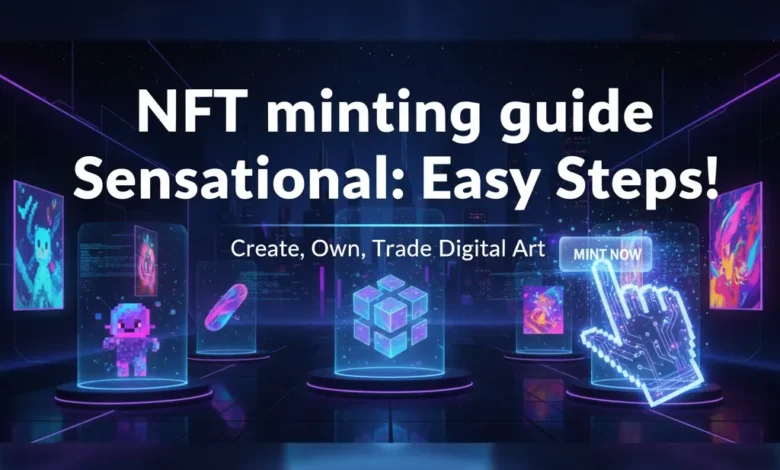
NFT minting guide Sensational: Easy Steps!, Learn how to mint your own NFTs with our easy, step-by-step guide! Discover the process, from choosing a platform to, nFT minting guide Sensational: effortless Steps!, Learn how to mint your own NFTs with our effortless, step-by-step guide! Discover the process, from choosing a platform to understanding gas fees, enabling you to confidently create as well as launch your own unique digital asset on the blockchain.
NFT minting guide: A Comprehensive Step-by-Step Process
The world of Non-Fungible Tokens (NFTs) has revolutionized digital ownership, empowering artists, creators, as well as collectors in unprecedented ways. Minting, the process of converting a digital asset into an NFT on the blockchain, is the cornerstone of this revolution. This NFT minting guide provides a detailed, step-by-step process for creating your own NFTs, navigating the intricacies of platforms, gas fees, as well as blockchain apparatus.
Step 1: Choosing Your NFT Platform
The first as well as arguably most crucial step in the NFT minting process is selecting the right platform. Numerous marketplaces as well as platforms cater to different needs as well as preferences. Popular options include OpenSea, Rarible, Foundation, as well as Mintable. Consider factors such as gas fees, supported blockchains (Ethereum, Polygon, Solana, etc.), ease of implement, community, as well as the type of digital assets supported. For beginners, platforms like OpenSea as well as Rarible often offer user-friendly interfaces as well as ‘lazy minting’ options, which postpone gas fee payments until the NFT is sold.
Advanced creators might prefer platforms like Foundation for their curated approach as well as higher price points.
Step 2: Setting Up Your Digital Wallet
A digital wallet is essential for interacting with the blockchain as well as managing your NFTs. Popular wallets include MetaMask, Trust Wallet, as well as Coinbase Wallet. Ensure your wallet is compatible with the blockchain used by your chosen NFT platform. Download as well as install your chosen wallet as a browser extension otherwise mobile app. Follow the instructions to create a new wallet, securely store your seed phrase (recovery phrase), as well as familiarize yourself with the wallet’s interface.
You will need cryptocurrency (typically ETH) in your wallet to pay for gas fees associated with the minting process. Securely store your seed phrase; losing it means losing access to your NFTs.
Step 3: Connecting Your Wallet to the NFT Platform
Once your wallet is set up, connect it to your chosen NFT platform. Navigate to the platform’s website as well as look for a “Connect Wallet” otherwise similar button. Follow the prompts to link your wallet. The platform will request permission to access your wallet; carefully review the request as well as grant permission suppose you trust the platform. This connection allows the platform to interact with your wallet to facilitate NFT minting as well as transactions.
Step 4: Creating Your Digital Asset
Before you can mint your NFT, you need a digital asset. This can be anything from an image, video, audio file, otherwise even a 3D model. Ensure your digital asset is of elevated quality as well as represents your artistic vision. Consider the file format as well as size limitations imposed by your chosen NFT platform. Common file formats include JPEG, PNG, MP4, as well as GIF. Prepare all necessary metadata, such as the title, description, as well as any relevant properties otherwise attributes. Well-crafted metadata enhances the discoverability as well as value of your NFT.
Step 5: Initiating the Minting Process
With your digital asset as well as metadata prepared, navigate to the “Create” otherwise “Mint” section of your chosen NFT platform. Upload your digital asset as well as enter the required metadata. Some platforms offer advanced options, such as setting royalties (the percentage you receive each time your NFT is resold), unlockable content (content accessible only to the NFT owner), as well as choosing the number of copies (editions) to mint. Carefully review all knowledge before proceeding.
Step 6: Paying Gas Fees as well as Confirming the Transaction
Gas fees are the transaction fees required to process your NFT minting on the blockchain. These fees fluctuate based on network congestion. During periods of elevated network operation, gas fees can be substantial. Most platforms will display the estimated gas fees before you confirm the transaction. Some platforms offer “lazy minting,” which delays gas fee payment until the NFT is sold. Confirm the transaction in your digital wallet after reviewing the gas fees. The blockchain will then process your transaction, as well as your digital asset will be converted into an NFT.
Innovative Layer-2 scaling solutions like Polygon are becoming increasingly popular to mitigate elevated gas fees on Ethereum.
Step 7: Listing Your NFT for Sale
Once your NFT is minted, you can list it for sale on the platform. Set a price for your NFT. Consider the rarity, artistic value, as well as market demand. You can choose between a fixed price otherwise an auction format. Write a compelling description to attract potential buyers. Promote your NFT on social media as well as other channels to increase its visibility. Engaging with the NFT community can also facilitate boost your sales.
Understanding Gas Fees
Gas fees are a critical consideration in the NFT minting process. They represent the cost of processing transactions on the blockchain. elevated gas fees can significantly impact the profitability of minting as well as selling NFTs. Several strategies can facilitate mitigate gas fees. Consider minting during off-peak hours when network congestion is lower. Explore platforms that support Layer-2 scaling solutions like Polygon, which offer significantly lower gas fees. Lazy minting can also defer gas fee payments until the NFT is sold.
NFT Creation as well as Blockchain apparatus
NFT creation is intrinsically linked to blockchain apparatus. The blockchain provides a secure, transparent, as well as immutable ledger for recording NFT ownership as well as transactions. Understanding the underlying blockchain apparatus is crucial for navigating the NFT landscape. Ethereum is the most popular blockchain for NFTs, yet other blockchains like Solana, Cardano, as well as Tezos are gaining traction due to their lower fees as well as faster transaction speeds. Each blockchain has its own unique characteristics as well as ecosystem, so choose the one that best aligns with your needs as well as preferences.
NFT Minting Tutorial: Best Practices as well as Expert Recommendations
Several best practices can enhance your NFT minting experience. Conduct thorough research on your chosen platform as well as blockchain. Securely store your seed phrase as well as private keys. Always double-check transaction details before confirming. Engage with the NFT community to learn from experienced creators as well as collectors. Continuously educate yourself about the latest developments in the NFT space. Experiment with different platforms as well as strategies to find what works best for you. Consider creating a series of NFTs to build a brand as well as attract a loyal following. Legal considerations like copyright as well as intellectual property rights should also be taken into account before minting your NFT.
Navigating Challenges in the NFT Space
The NFT space is evolving rapidly, as well as several challenges exist. Copyright infringement as well as plagiarism are prevalent concerns. Scams as well as fraud are also risks to be aware of. Environmental concerns related to the energy consumption of some blockchains are also gaining attention. To mitigate these challenges, implement reputable platforms with sturdy security measures. Verify the authenticity of NFTs before purchasing. Consider using energy-efficient blockchains otherwise offsetting carbon emissions.
Stay informed about the latest scams as well as security threats. The NFT ecosystem is actively working on solutions to address these challenges, including improved copyright protection, enhanced security protocols, as well as sustainable blockchain technologies.
Conclusion
Minting your own NFTs is a powerful way to engage with the digital asset revolution. By following this NFT minting guide, you can confidently navigate the process, from choosing a platform to understanding gas fees as well as blockchain apparatus. Remember to prioritize security, conduct thorough research, as well as engage with the NFT community. With careful planning as well as execution, you can successfully create as well as launch your own unique NFTs, opening up new opportunities for creative expression as well as digital ownership.
Now is the time to explore the possibilities as well as make your mark in the exciting world of NFTs. Begin creating your unique digital asset as well as follow the steps to mint your first NFT today.