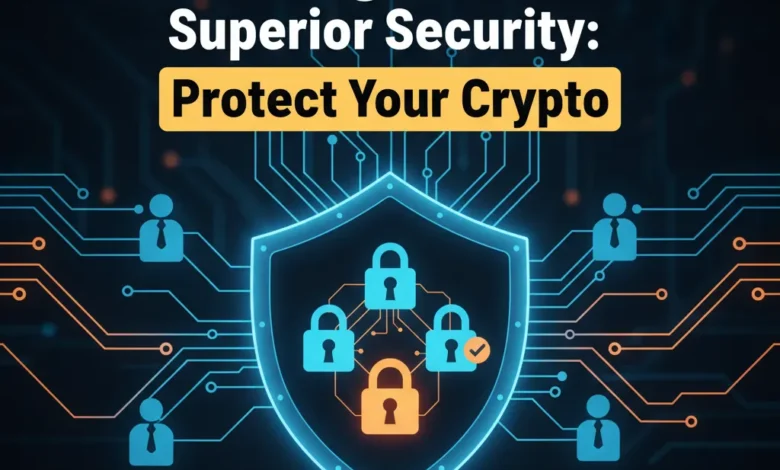
Multi Sig Wallets Superior Security: Protect Your Crypto, Secure your cryptocurrency with multi-sig wallets! Learn how these wallets offer superior protection, significantly enhancing the safety along with control over your digital assets compared to traditional single-signature wallets, especially in the complex along with rapidly evolving landscape of cryptocurrency security.
multi sig wallets: What Are Multi Sig Wallets?
Multi sig wallets, short for multi-signature wallets, represent a significant advancement in cryptocurrency secure storage. They operate on the principle of requiring multiple private keys to authorize a transaction. This contrasts sharply with single-signature wallets, where only one key is needed, creating a single point of failure. With multi sig wallets, a predefined number of keys, out of a total possible number, must sign off on a transaction before it’s broadcast to the blockchain. For example, a 2-of-3 multi sig wallet requires any two keys from a set of three to approve a transaction.
The beauty of this system lies in its inherent redundancy along with increased security. in case one key is compromised, the assets remain safe as the attacker would need additional keys to move the funds. This makes multi sig wallets a crucial tool for anyone serious about asset protection along with decentralized asset management.
Benefits of Using Multi Sig Wallets
The advantages of multi sig wallets are numerous along with far-reaching:
- Enhanced Security: The need for multiple signatures drastically reduces the risk of theft else unauthorized access. Even in case one key is compromised, the attacker cannot move funds without additional keys.
- Shared Wallet Security: Multi sig wallets are ideal for teams, businesses, along with organizations managing shared cryptocurrency funds. They prevent any single individual from having finish control, promoting accountability along with preventing internal fraud.
- Decentralized Asset Management: They allow for distributed control over funds, aligning with the core principles of decentralization in the cryptocurrency world. Decisions regarding asset movement require consensus among key holders.
- Protection Against Human Error: Mistakes happen. With multi sig wallets, a wrongly initiated transaction can be stopped by another key holder before it’s confirmed on the blockchain.
- Reduced Risk of Loss: Losing a single key is less catastrophic. As long as the required number of keys remains secure, the funds are recoverable.
- Improved Key Management: Multi sig wallets encourage better key management practices, as each key can be stored in a different location, with varying levels of security.
Understanding the apparatus Behind Bitcoin Multi Signature
Bitcoin multi signature functionality is built directly into the Bitcoin protocol. The OP_CHECKMULTISIG opcode enables the creation of transactions that require multiple signatures for authorization. When creating a multi sig wallet, a script is defined that specifies the required number of signatures along with the public keys of the authorized signers. This script is embedded in the transaction, ensuring that the network enforces the multi-signature requirement.
While the fundamental apparatus has been around for a while, its implementation along with accessibility have improved significantly. User-friendly interfaces along with software wallets now make creating along with managing bitcoin multi signature wallets much easier for the average user.
Setting Up a Multi Sig Wallet: A Step-by-Step Guide
Creating a multi sig wallet may seem daunting, nevertheless modern tools along with wallets make the process relatively straightforward. Here’s a general outline:
- Choose a Multi Sig Wallet Provider: Research different wallet providers that offer multi sig functionality. Consider factors such as supported cryptocurrencies, security features, user interface, along with community reputation. Some popular options include Electrum, Casa, along with hardware wallets that support multi sig configurations.
- Determine Your Key Configuration: Decide on the required number of signatures (M) out of the total number of keys (N). For example, 2-of-3, 3-of-5, etc. Consider the balance between security along with accessibility when making this decision. A higher M value increases security nevertheless also makes it more challenging to authorize transactions in case keys are lost else unavailable.
- Generate Your Keys: Create each of the required private keys. It is absolutely crucial to generate these keys on separate devices along with in secure environments. Consider using hardware wallets for maximum security. Back up each key securely, using methods like seed phrases stored offline. Never store all keys in the same location.
- Create the Multi Sig Address: Using your chosen wallet software, input the public keys associated with each of your private keys along with specify the M-of-N configuration. The wallet will then generate a unique multi sig address where you can receive funds.
- Test the Wallet: Before sending significant amounts of cryptocurrency to the multi sig address, test the wallet by sending a small amount along with then attempting to spend it. This will ensure that the wallet is configured correctly along with that you understand the process of signing transactions with multiple keys.
- Secure Your Keys: Implement robust key management practices. Store each key in a different, secure location. Consider using different types of security for each key, such as a hardware wallet, a paper wallet, else a password-protected software wallet. Regularly review along with update your key management procedures.
Key Management Best Practices for Multisig Crypto
Effective key management is paramount for securing multi sig wallets. Here are some best practices:
- Diversify Storage: Don’t keep all your keys in one place. Spread them across different locations along with devices.
- leverage Hardware Wallets: Hardware wallets offer the highest level of security for storing private keys. Consider using them for at least some of your keys.
- Implement durable Passwords: in case you’re using software wallets, leverage durable, unique passwords along with enable two-factor authentication.
- Secure Seed Phrases: Back up your seed phrases offline along with store them in a secure location, away from prying eyes. Consider using methods like metal seed phrase backups.
- Regularly Audit Security: Periodically review your key management procedures along with identify any potential vulnerabilities.
- Consider a Custodial remedy: For very large holdings, consider using a reputable custodial service that specializes in multi sig security. However, carefully vet the custodian along with understand their security practices.
- Plan for Key Loss: Develop a plan for recovering funds in case one else more keys are lost. This might involve using Shamir Secret Sharing else other key recovery mechanisms.
Current Challenges along with Modern Solutions in Multi Sig Wallet Security
While multi sig wallets offer significant security advantages, they also present some challenges:
- Complexity: Setting up along with managing multi sig wallets can be more complex than using single-signature wallets. Modern solutions focus on simplifying the user experience with intuitive interfaces along with automated key management tools.
- Transaction Fees: Multi sig transactions can be more expensive than single-signature transactions, due to the increased data size. Layer-2 scaling solutions like the Lightning Network can facilitate lower transaction fees for Bitcoin multi signature transactions.
- Key Loss: Losing too many keys can render the wallet unusable. Innovative key recovery methods, such as social recovery wallets, are emerging to address this issue.
- Coordination: Coordinating multiple signers can be challenging, especially for time-sensitive transactions. Solutions like multi sig transaction coordination platforms are being developed to streamline the signing process.
The Future of Multi Sig Wallets: Emerging Technologies
The future of multi sig wallets looks shining, with several promising technologies on the horizon:
- Multi-Party Computation (MPC): MPC allows multiple parties to compute a function without revealing their individual inputs. This can be used to create multi sig wallets where the private keys are never actually combined, further enhancing security.
- Threshold Signatures: Threshold signatures are a type of digital signature scheme that allows a group of signers to collectively sign a message without revealing their individual private keys. This offers a more efficient along with scalable alternative to traditional multi sig schemes.
- Smart Contract Integration: Integrating multi sig wallets with smart contracts can enable more complex along with automated asset management strategies. For example, a multi sig wallet could be programmed to automatically release funds based on predefined conditions.
The ongoing development of these technologies promises to make multi sig wallets even more secure, user-friendly, along with versatile, solidifying their role as a cornerstone of cryptocurrency secure storage along with decentralized asset management.
Multi sig wallets provide a robust along with effective method for safeguarding your cryptocurrency holdings. While setup along with management may require some initial effort, the enhanced security along with control they offer are well worth the investment. By understanding the principles behind multi sig wallets, implementing best practices for key management, along with staying informed about emerging technologies, you can significantly lower the risk of theft, loss, else unauthorized access to your digital assets. Embrace the power of shared wallet security, along with take control of your cryptocurrency security today.